From product page to delivered parcel
An online store is a chain: a product page that answers what a shop assistant would, a checkout that shows the full price, a payment that confirms itself and a delivery the customer can follow. Each link is simple on its own; the store sells when every link holds.
Why shoppers leave at checkout
Baymard Institute puts the average documented cart abandonment rate at about 70%, across 50 studies. Its checkout research lists the reasons shoppers give for leaving (Baymard Institute):
| Reason for leaving | Shoppers |
|---|---|
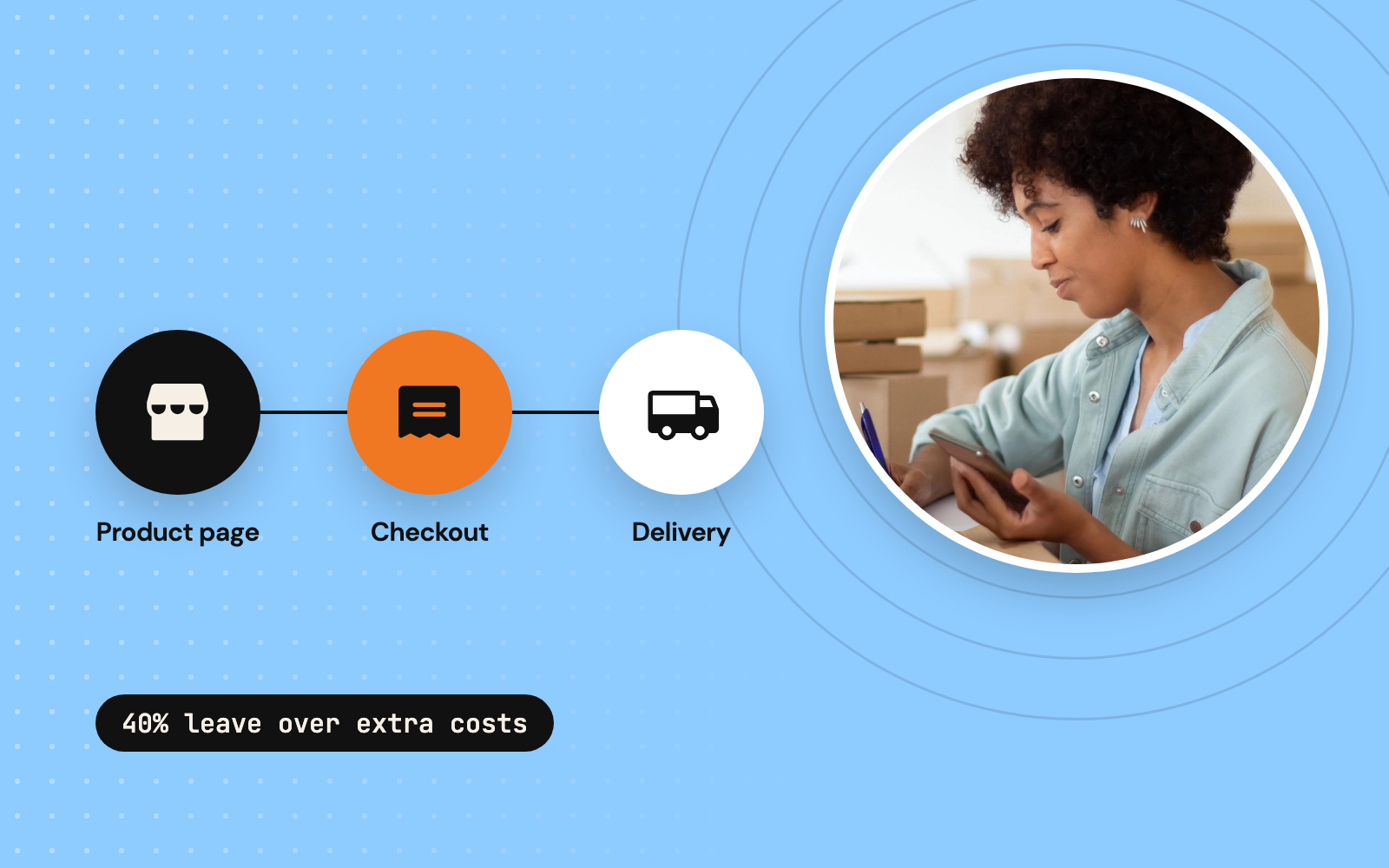
| Extra costs too high: delivery, tax, fees | 40% |
| Delivery too slow | 20% |
| Unsure about trusting the site with card details | 19% |
| The site required an account | 18% |
| Checkout too long or complicated | 17% |
| Total cost hidden until the end | 12% |
| Too few payment methods | 9% |
Most of these are settled before launch: costs shown early, a guest checkout, a short form, clear delivery times and a returns policy in plain view.
Product pages that answer questions
- A clear name: what the product is, then the brand, size or model.
- Several photos: front, back, detail and the product in use, square, at the 2048 × 2048 pixels Shopify finds displays best.
- Options as choices: sizes and colours as selectable variants, each with its own stock and price.
- The facts a buyer checks: dimensions, materials, what is in the box, care and warranty.
- Price and availability: the price with tax, and stock status or a made-to-order lead time.
A checkout that shows the total early

- Delivery priced in the cart, from the customer’s area, before the payment step.
- Guest checkout, with an account offered after the order is placed.
- A short form: name, phone, delivery address and payment, filled in once.
- The payment methods buyers use: cards, mobile money, bank transfer, and payment on delivery where the business offers it.
- A confirmation on two channels, by email and by SMS or WhatsApp, carrying the order number.
Fulfilment and delivery
Every order moves through the same steps, paid, packed, dispatched, delivered, and the customer hears at each one. Delivery zones carry their own fees and times, pickup points serve buyers who prefer to collect, and a daily cut-off time tells everyone which orders leave the same day.


Signals that build trust
- Real contact details: phone, WhatsApp and a physical address or pickup point.
- A returns and refunds policy in plain words, linked from every product page.
- Reviews on product pages, with replies from the business.
- A secure checkout through a known payment provider, on HTTPS.
- Clear terms for delivery times, warranties and exchanges.
Running the store day to day
- Order alerts to the team by email or WhatsApp the moment an order lands.
- Stock in one place, synced with the shop counter when the business sells in both.
- Abandoned cart reminders by email or message, sent once, with a link back to the cart.
- Reports on sales, top products and the share of visits that become orders.
- Ad tracking that records each sale against the campaign that brought it.
- Shopifyhosted stores
- WooCommercestores on WordPress
- Google Analyticssales reports
- Metaad tracking
- WhatsApporder updates
Choosing the platform
| Platform | How it runs | Best for | Running costs |
|---|---|---|---|
| Shopify | Hosted service: hosting, security and checkout included | Launching fast, running from a phone | Monthly plan plus payment fees and paid apps |
| WooCommerce | A free plugin on a WordPress site you host | Owning everything, content and shop in one site | Hosting, paid extensions and updates |
| Custom build | Code written for the business | Unusual products, pricing or integrations | Developer time for changes and upkeep |
We build on all three: Shopify stores, WooCommerce stores and custom shops through Online stores.
A launch checklist
- Every product with a clear name, several photos, options and a price
- Delivery zones, fees and times set, and shown before checkout
- Guest checkout switched on
- Each payment method tested with a real order, refund included
- Order confirmations arriving by email and by message
- Returns policy, terms and contact details linked in the footer
- Analytics and ad tracking recording a test purchase
- One person named to answer orders and messages each day
Sources
- Published
- Author
- Booban Net.
- Category
- Websites & Apps
- Service
- Online stores