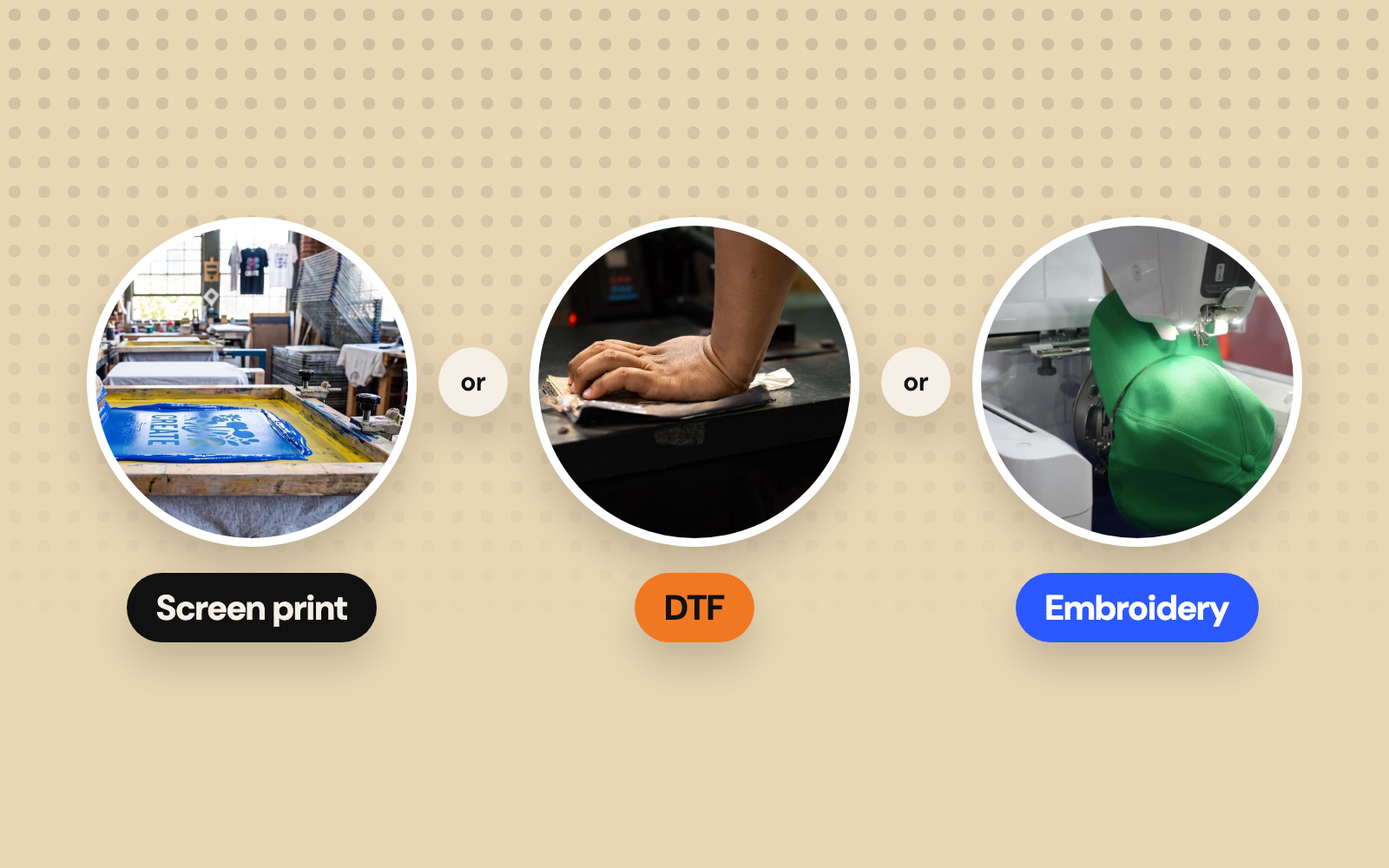
One design, three ways onto a shirt
The same logo can be pushed through a screen, transferred from a film or stitched in thread. Each method has its own look, feel, lifespan and price curve, and the right one follows from three questions: how many shirts, how many colours, and which fabric.
The three methods at a glance
| Screen print | DTF | Embroidery | |
|---|---|---|---|
| How it works | Ink pushed through a mesh screen, one screen per colour | Design printed on film with a white layer and adhesive, then heat-pressed on | Thread stitched by machine from a digitised file |
| Best for | Bold designs in a few colours, larger runs | Full-colour artwork, small runs, mixed fabrics | Logos on polos, caps, jackets and uniforms |
| Colours | Each colour adds a screen | Any number, gradients and photos included | Solid thread colours; gradients become bands |
| Feel | Ink in and on the fabric; softest with water-based ink | A thin, smooth layer on the surface | Raised, textured stitching |
| Price per piece | Falls as the quantity rises | Steady at any quantity | Set by stitch count and size |
| Fabrics | Cotton and blends; polyester with suitable ink | Cotton, polyester and blends, light or dark | Most fabrics, best on sturdier ones such as piqué, fleece and twill |
Screen print: the price drops as the run grows
Each colour in the design gets its own screen, and each screen takes setup time before the first shirt is printed. Spread across five hundred shirts, that setup adds little to each one; across ten, it sets the price. Screen printing gives vivid, hard-wearing colour on cotton and suits designs built from a few flat colours: a logo, a slogan, a team crest.
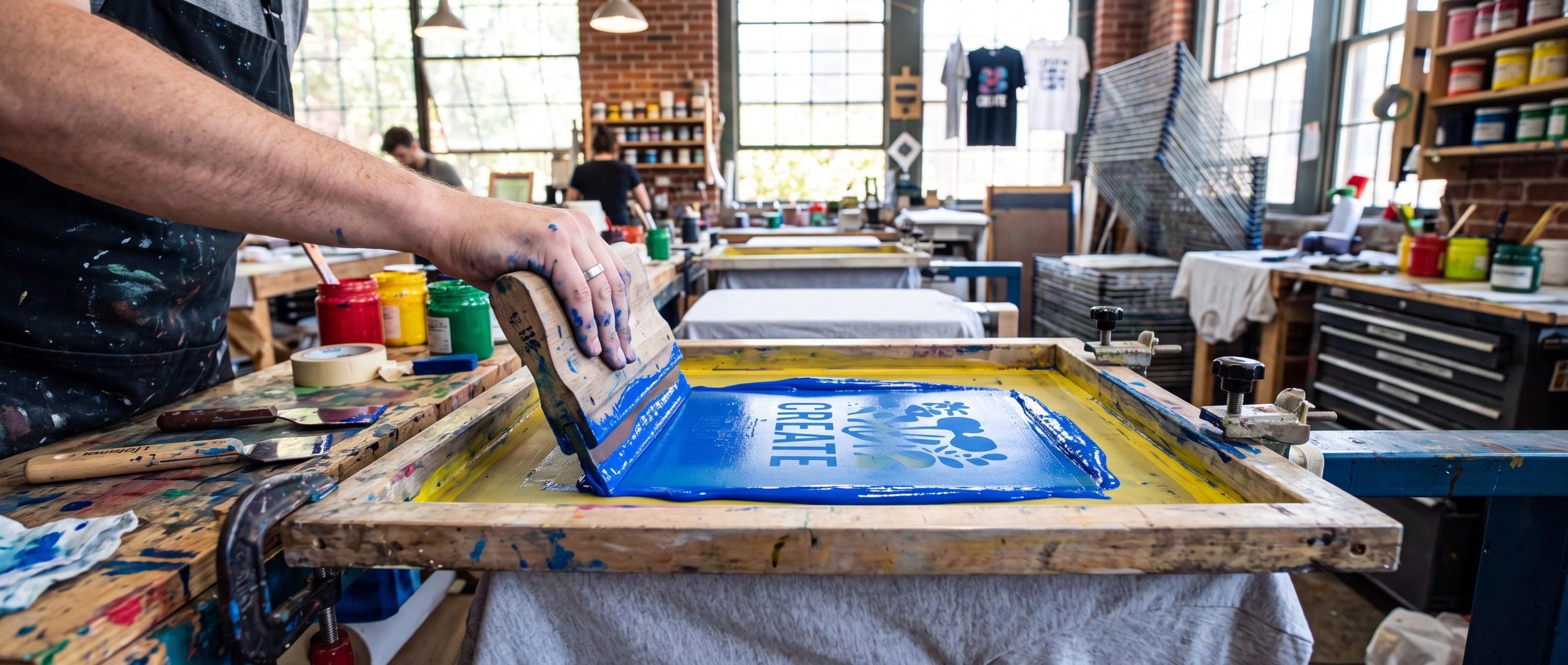
Artwork for screen print is separated into spot colours, one layer per screen, with fine lines thickened so the mesh holds them. On dark shirts a white base layer goes down first, so the colours on top stay bright.
DTF: full colour at any quantity
Direct-to-film printing puts the design onto a clear film in colour plus a layer of white, coats it with a powdered adhesive, cures it, then presses it onto the garment with heat. With zero screens to set up, the first shirt costs about the same to print as the hundredth, and the design can carry photos, gradients and fine detail. It takes to cotton, polyester and blends, light or dark, which makes it the natural choice for mixed orders and for names and numbers on team kits.
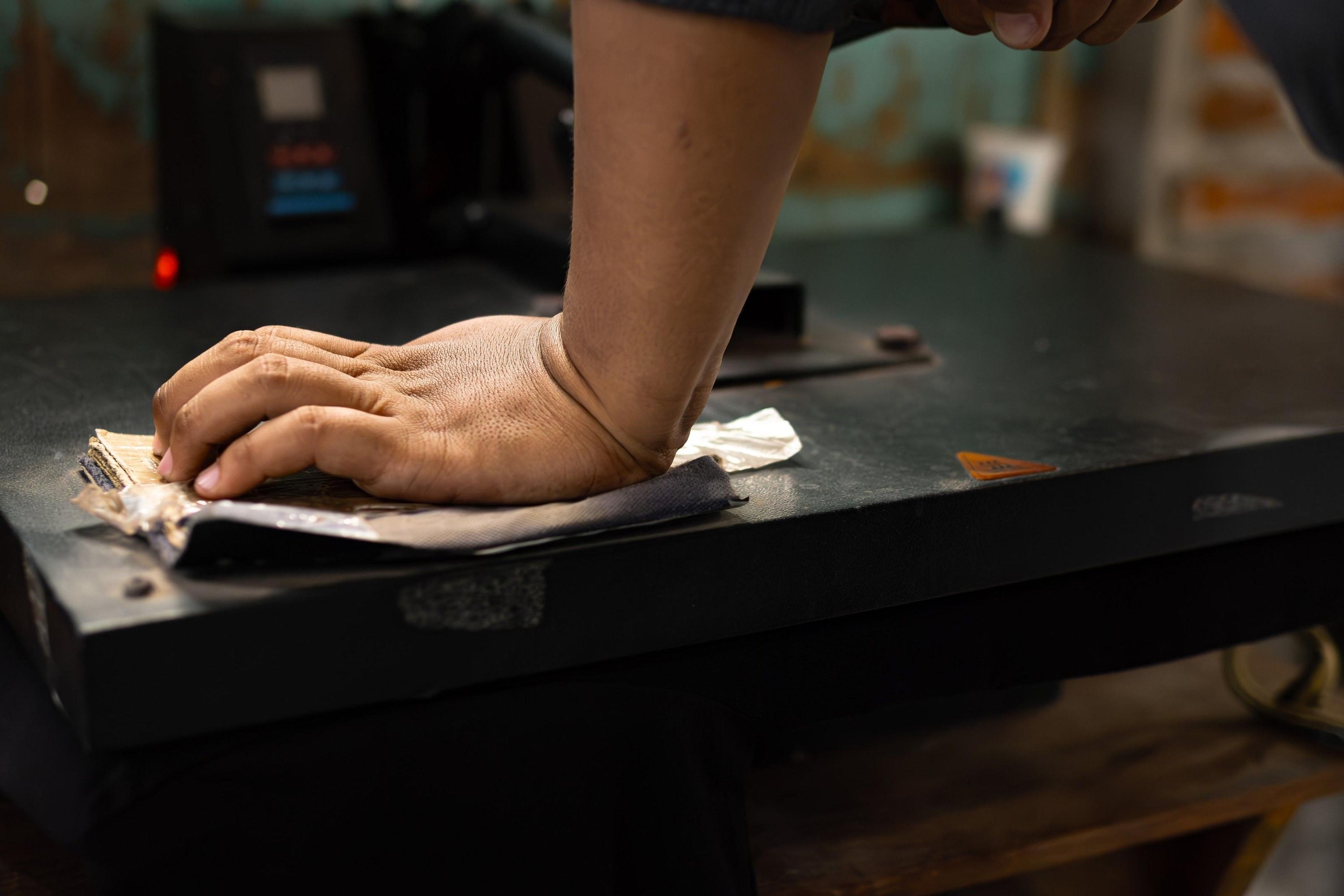
The print sits as a thin, flexible layer on top of the fabric. Large solid areas feel firmer than the shirt around them, so designs with open shapes and gaps wear more comfortably.
Embroidery: a finish that lasts as long as the garment
Embroidery stitches the logo in thread. The artwork is first digitised: turned into a stitch file that sets the order, direction and density of every stitch. It suits logos on polos, caps, jackets and uniforms, gives a premium raised finish, and keeps its look through years of washing.
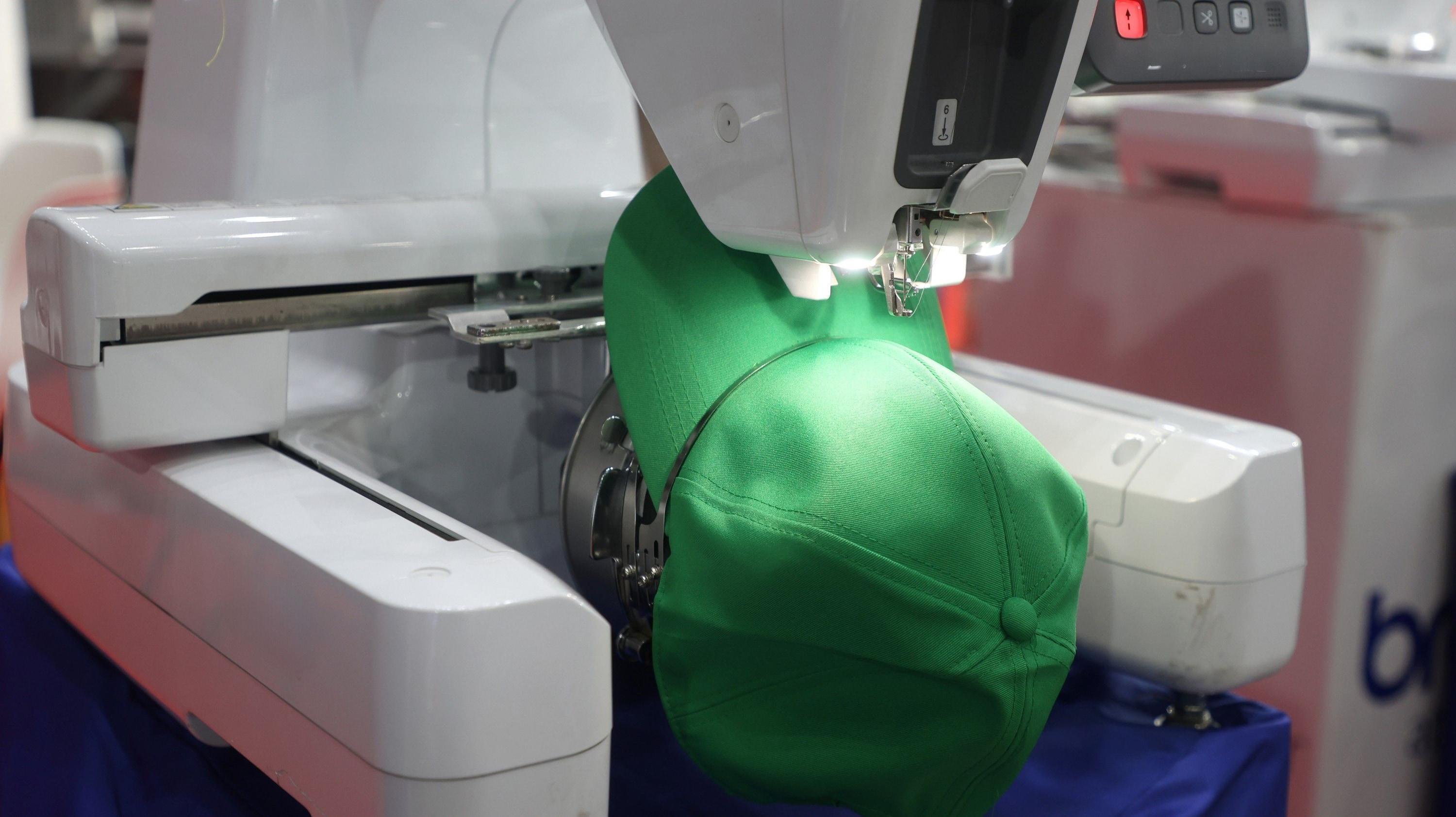
Thread has a minimum width, so small lettering and thin lines are enlarged or simplified, and gradients become solid bands of colour. Price follows the number of stitches: a chest logo costs less than a full back design.
Choosing for a team order
| Order | Method | Why |
|---|---|---|
| Ten shirts with a full-colour design | DTF | Zero setup per colour, full colour at a steady price |
| Two hundred shirts with a two-colour logo | Screen print | Setup spread across the run, the lowest price per shirt |
| Polos and caps for staff | Embroidery | Durable, premium and suited to workwear |
| Team kit with names and numbers | Screen print or DTF for the shared design, DTF for names and numbers | Every shirt carries its own name and number |
Making prints last
- Wash printed garments inside out at 30 °C, with similar colours.
- Line dry, or tumble dry on a low setting.
- Iron on the reverse side, away from the print.
- Press embroidery from the back, with a cloth between the iron and the stitching.
Send the quantity, the colours in the design and the deadline, and we match the method to all three through Apparel & workwear. The artwork itself is prepared for any of the three through Merch & T-shirt artwork.
Print & MerchandiseShirts, merchandise, banners, signs, packaging and more, all in your brand, made to be worn, handed out and seen.- Published
- Author
- Booban Net.
- Category
- Print & Merchandise
- Service
- Apparel & workwear